Underground Infrastructure Done Right the First Time
Trenching in Beaufort for utility installation, drainage systems, and site development requiring precise excavation
When you install water lines, drainage systems, or other underground infrastructure, the trench itself determines whether those systems function correctly over time. Kelly Brothers Excavation & Land Services creates trenches for utility and drainage projects in Beaufort, working with property owners preparing for construction, expanding service connections, or adding subsurface water management. Trenching depth, width, and grade must match the specific requirements of what you're installing, whether that's maintaining slope for gravity drainage or providing adequate cover for buried utilities.
The process uses equipment matched to project scale and soil conditions, cutting trenches to specifications that accommodate pipe diameter, bedding material, and required burial depth. Trench excavation in Beaufort's clay soils requires attention to sidewall stability and moisture conditions, as saturated clay behaves differently than dry material. Trenching aligns with project plans to ensure utilities reach their intended destinations at the correct depth and grade, whether you're connecting to existing infrastructure or creating standalone drainage routes.
Arrange a site consultation to review your utility installation plans and determine trenching specifications that support your project timeline.
How Trenching Addresses Underground Installation Needs
Trenching work begins with marking utility locations and establishing the route that minimizes conflicts with existing infrastructure while meeting grade requirements for the system being installed. Excavation proceeds to the depth and width specified for the utility type, maintaining consistent dimensions that allow proper bedding and backfill. Equipment selection depends on trench depth, length, and whether conditions require shoring or dewatering to maintain safe working space.
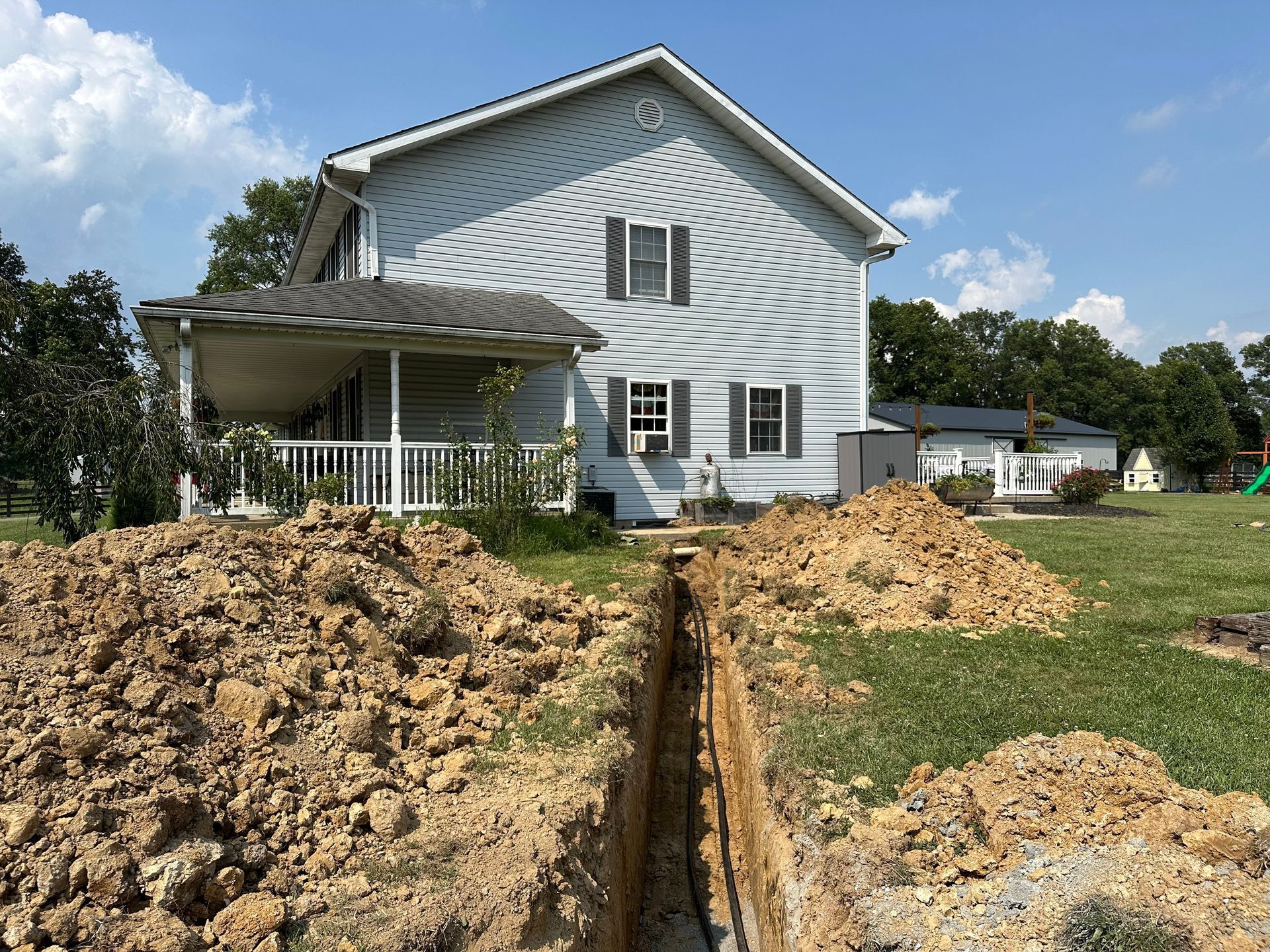
Once trenching is complete and utilities are installed, you see a continuous pathway ready for pipe placement, with sidewalls cut cleanly enough to prevent excessive soil from falling into the trench before installation. The trench bottom provides a stable base for bedding material, maintaining the grade needed for drainage systems to function by gravity. Trenching supports both standalone projects where excavation is the primary scope and larger site work where underground utilities integrate with grading, clearing, or development activities.
The service focuses on creating trenches that match engineering specifications, not on installing the utilities themselves unless coordinated as part of a broader project. Trench depth, width, and route are determined by what you're installing and any regulatory requirements for burial depth or separation from other utilities. Factors affecting the approach include soil type, groundwater levels, proximity to structures, and whether the trench must cross driveways or other surfaces that require restoration.
Answers to Frequent Trenching Questions
Customers typically want to know how trenching specifications are determined and what site conditions affect excavation methods.
What determines trench depth and width?
The utility or drainage system being installed dictates minimum depth for protection and function, while width must accommodate the pipe diameter plus bedding and backfill material. Drainage trenches also require specific slopes to maintain gravity flow.
How does soil type affect trenching in Beaufort?
Clay soils hold sidewall shape better than sandy soils but become slippery and difficult to work when saturated. Trenching in wet conditions may require dewatering pumps or scheduling during drier periods to maintain trench stability during utility installation.
When is trenching done relative to other site work?
Trenching for utilities typically occurs after rough grading establishes final elevations but before final surfacing or landscaping. This sequence ensures utilities are at the correct depth relative to finished grade and prevents damage to completed surfaces.
What happens to excavated soil from trenching?
Excavated material is used for backfill after utility installation if it meets compaction requirements, or it's removed from the site if unsuitable or excess. Trench backfill must be compacted in layers to prevent settling that creates depressions over the utility route.
How does trenching coordinate with utility installation crews?
Trenching creates the excavation, which remains open long enough for utility contractors to install pipe, conduit, or cable before backfilling begins. Coordination ensures the trench doesn't remain open longer than necessary, reducing safety concerns and trench wall degradation.
Kelly Brothers Excavation & Land Services excavates trenches to the specifications your utility installation requires, working within project timelines to keep underground work progressing efficiently. Contact us to discuss trench dimensions and site conditions for your drainage or utility project.